I stepped into the drum-shaped Hamer Hall relieved to have escaped the rush of the evening traffic and cold wind. The warm golden and orange hues of the Hamer Hall décor, combined with the smiles and courteous words from the concert hall staff, put me at ease and slowed down time. I was transported to a different realm – a space of culture and lofty ideals where history is made.
Tonight, history was indeed in the making. I could sense the excitement in the audience, as many, like me, were looking forward to hearing Clara Schumann’s Piano Concerto in A minor, Op. 7, live for the first time. The emotion was heightened with a musical acknowledgement of country, Long Time Living Here by Yorta Yorta composer Deborah Cheetham. This opened a space for the magic of music and storytelling to unfold.
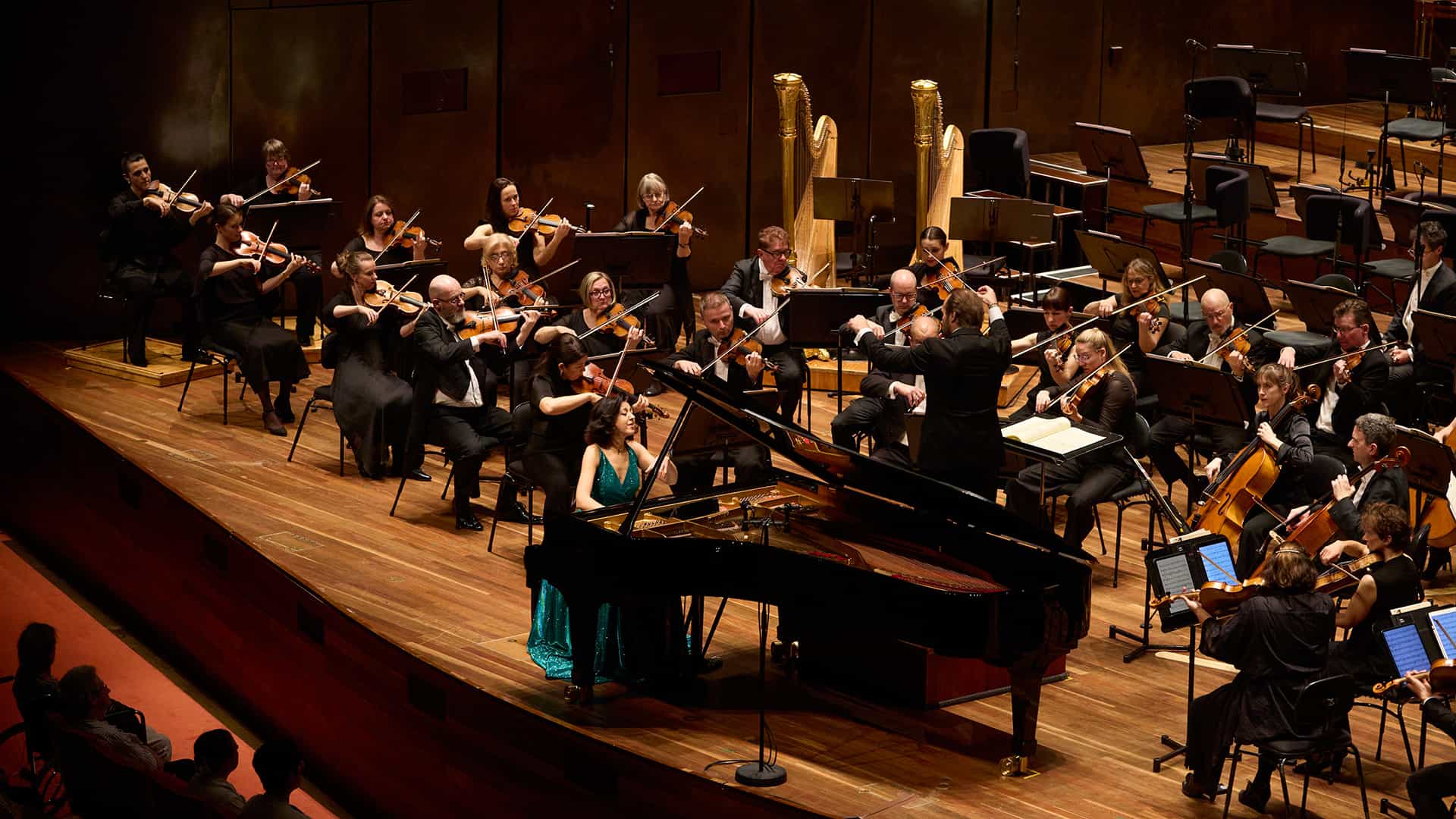
The Melbourne Symphony Orchestra, conducted by Fabien Gabel and joined by pianist Alexandra Dariescu, delivered a night of touching music with a carefully curated programme titled Forbidden Love.
The theme of the concert alludes to the love between the young pianist Clara Wieck and composer Robert Schumann, which her father disapproved of so vehemently that the young couple had to go to court. They married in 1840, one day before Clara turned 21. However, the musical journey goes beyond the Schumann love story to encompass various ways of expressing love in music – the beauty and tragedy of hidden love in the Pelléas et Mélisande suite by Claude Debussy, arranged by Altinoglu; Wagner’s expression of love that transcends life in the Prelude and Liebestod from the opera Tristan und Isolde, and the power of love that connects the natural and supernatural worlds in Richard Strauss's Die Frau ohne Schatten symphonic fantasy.
The Melbourne Premiere of Clara Schumann’s Piano Concerto
Composed in 1834-35, Clara Schumann’s concerto was premiered by the Gewandhaus Orchestra and conducted by Felix Mendelssohn in Leipzig on 9 November 1835. Clara was sixteen years old, and despite her formative age as a composer, the concerto is significant in the Romantic repertoire, with its emotional depth, structural innovation and celebration of Clara’s piano virtuosity.
The three movements flow seamlessly into one another. Most intriguing is the middle movement, Romance, which modulates surprisingly to A flat major. The song without words begins with a piano solo and is later joined by a cello. The last movement features the most substantial interplay between piano and orchestra.
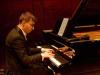
Pianist Alexandra Dariescu captured the vigour of the music with zest. Her interpretation highlighted Clara’s brilliance at the piano whilst guiding the listener through the work with rhythmic precision and clear musical phrasing. Dariescu expressed the emotions and musical ideas with mastery and such vivid energy that the audience responded with applause, prompting her return for multiple bows.
Throughout her career as a touring pianist, Clara Schumann showcased her piano concerto during her many tours. Since then, the work has been largely absent from the symphonic repertoire worldwide. It took nearly two hundred years for it to be offered in Melbourne.
Performers like Dariescu commit themselves to bringing to light the masterpieces of women composers while drawing inspiration from their creative and personal legacies. Since the premiere was not announced during the concert, Dariescu took it upon herself to tell the audience about this historical moment. She was so excited that she played a short encore by Florence Price called The Goblin and the Mosquito.
One wonders whether the musical value of Clara Schumann’s piano concerto would be more appreciated if it is placed in a programme that references its original musical context, early Romanticism. Yet, even among such large orchestral pieces that were written much later, Alexandra Dariescu's fervent performance of Clara’s concerto offered an immediate and honest expression of love that felt more genuine and infectious than the complex compositions by Debussy, Wagner, and Strauss.
Symphonic Sound
Under the baton of guest conductor Fabien Gabel, the MSO articulated masterfully the nuances of Debussy’s impressionism, the Romantic elements of Clara Schumann’s piano concerto, the rich harmonic colours of Wagner’s composition, and the textures of Richard Strauss's symphonic fantasy. The full orchestral sound, variety of textures and nuances of instrumentation and dynamics of these pieces rendered a rich and fulfilling auditory experience.
Gabel’s reading of Debussy was detailed in instrumental nuances and dynamics, and true to the importance of silence in this work. His emotional investment in Wagner’s Prelude and Liebestod from Tristan und Isolde guided the orchestra to a poignant performance of this well-loved work.
With careful rhythmic and dynamic pacing, the orchestra built to a peak towards the end of Strauss’s work, such that it created a visceral transformation that electrified the atmosphere. The nearly filled Hamer Hall resounded with applause, and I could hear the audience sharing their enthusiasm and admiration for the music and performers as I was leaving.
Whether the tragedy of hidden love, the elation of transcendental love, or the energy of youth, MSO’s Forbidden Love is a memorable programme and performance. Each piece presented the audience with the opportunity to immerse themselves in sound and reflect on the intricacies of love, longing, and the human experience. Notably, this was a landmark performance featuring an important work of Western orchestral repertoire by a woman composer that was performed in Melbourne for the first time.
Event details
Melbourne Symphony Orchestra presents
Forbidden love
Conductor Fabien Gabel
Venue: Hamer Hall | Arts Centre Melbourne, VIC
Dates: 10 and 12 October 2024
Tickets: from $70
Bookings: www.mso.com.au